₨2 — Two Rupees
The artwork
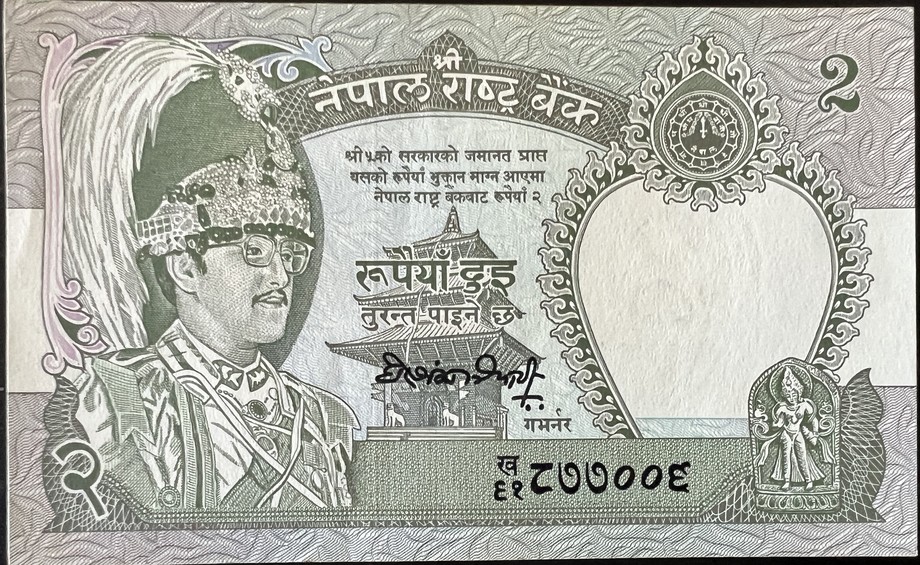
Front: King Birendra Bir Bikram Shah Dev in military dress, sash and heavy braid, wearing the plumed royal cap and his familiar dark-rimmed spectacles. Behind him a tiered pagoda temple of the Kathmandu valley rises through the guarantee text, all in Nepali: the bank's undertaking to pay two rupees on demand, with the Governor's signature beneath. The bank's roundel sits above the shaped watermark panel at right, a small standing deity below it.
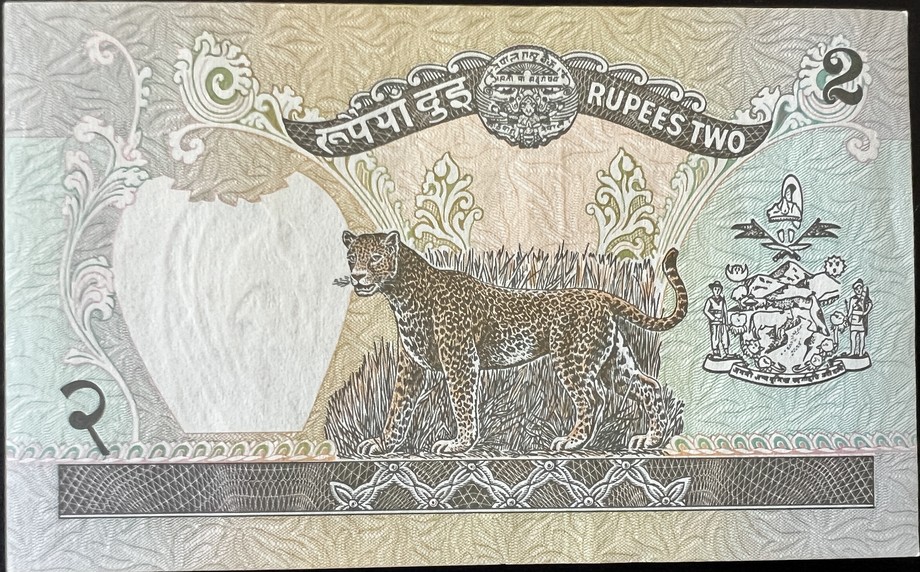
Back: A leopard walking out of tall grass, spotted flank and long curled tail worked in fine engraving — a quiet piece of Nepalese wildlife drawing rather than a monument. The banner above carries the denomination twice, "रुपैयाँ दुई" and "RUPEES TWO", flanking the crest. At right, the old royal arms of Nepal: crossed kukris, the cow and mountains, two soldiers, and the motto ribbon.
In circulation
The uniformed Birendra design served through the 1980s and 1990s, one of the smallest denominations in daily use for tea and bus fares. It was overtaken after 2001 by notes bearing King Gyanendra, and then by the republican issues showing Everest in place of any monarch; the two-rupee value has since given way to coin.
Details
- IssuerNepal Rastra Bank (नेपाल राष्ट्र बैँक)
- CurrencyRupee (₨)
- DenominationTwo Rupees
- Collectedon the Nepal journeys, 1993–2014
- SeriesKing Birendra in military uniform; leopard reverse
- SignatureGovernor, single signature at centre front
- SecurityShaped watermark panel at right, clear on both sides; Devanagari serial with Devanagari prefix